How we work
in Product
A walkthrough of how the Understory product team is organised, how we decide what to build, how work flows from idea to launch — and how the rest of the company plugs in.
The map for today
Who we are
One product team, the disciplines inside it, and the leaders who own each lens.
How we decide
Strategy → outcomes → initiatives. Foundation vs Frontier, and how we invest.
How work flows
Building ahead, the shaping process, keeping the product healthy, and our rituals.
How you plug in
Product opportunities, LaunchPad, the Insights Dashboard, and how to work with us.
The words we use
A quick primer on the vocabulary you'll hear today — it shows up everywhere in how we work.
The future of experience management.
Imagine a platform that doesn't just automate admin, booking, and payments but redefines the way experiences are created and shared.
A platform that transforms data into actionable, game-changing insights.
A platform that gives you a team of AI-driven specialists working around the clock ensuring every guest is reached, heard, and supported.
But our product vision goes beyond tools and transactions. We're building the world's first ecosystem where experience creators are empowered to dream, create, and grow.
Ultimately, Understory will be the most powerful business-in-a-box tool ever seen, enabling independent experience creators building thriving and profitable businesses.
This is the future of Understory. It's time to build.
One product team
Engineers, designers, product managers and leadership are all part of one team working toward one product vision — one framework, one shared language. The functional groups are disciplines, not separate teams.
- Functional axis — engineering, design, PM. Where people have reporting lines, craft, and career growth.
- Mission axis — the initiatives being built. Where the day-to-day work actually happens.
- Silos create information asymmetry — and asymmetry creates bad product decisions.
- People are fluid, structure is stable: we move talent to where it's needed.
- To the company, we are simply "the product team."
Who's who
The VPs are functional leaders — their responsibility spans the entire product, not one initiative. Each guards one lens of quality.
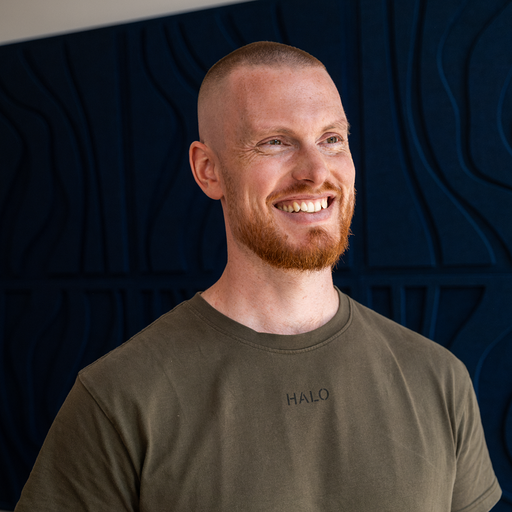
Lars
Strategy, portfolio & the roadmap. Sets the Foundation/Frontier ratio. Final call on what we build.

Christian
Product Management + commercial & Go-To-Market. All PMs report here.

Sari
Design, research, quality & coherence. Owns the Leaf design system.
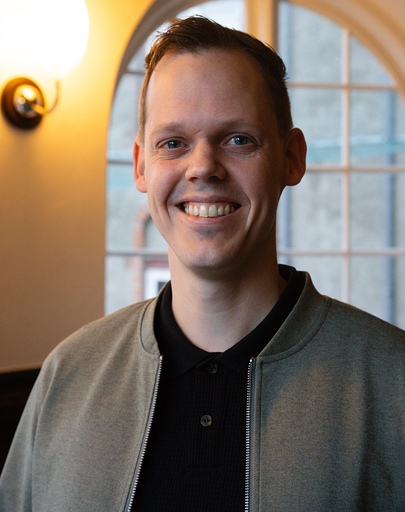
Bjørn
Technical excellence, architecture & delivery. All engineers report here.
Every task traces back to "why does this matter?"
Our process is a stack of layers. The most common failure mode is skipping one — jumping from strategy straight to building without defining the outcome.
Powering 1,000,000 experience hosts by 2030.
Foundation & Frontier
These are fundamentally different in nature, so we don't prioritise them against each other. Instead we protect a ratio of capacity between them, set by the CPTO.
Foundation
Deepening & extending the known product surface. Not maintenance — active construction. It compounds over time.
"Foundation is our evolution."
Frontier
Creating entirely new product surfaces — capabilities that change what Understory is or can become. Higher risk, longer horizon.
"Frontier has the potential to be a revolution."
Neither is more important. When a Frontier bet matures and proves itself, it graduates into the Foundation.
Initiatives, bets, projects & seats
Initiative
A focused work stream with a mission, an owner, allocated seats and success metrics. It describes a problem space we're investing in — not a solution.
Bet
A deliberate, time-bound investment where the outcome is uncertain but the upside justifies the risk. Frontier initiatives are bets almost by definition.
Project
A scoped piece of work inside an initiative — a defined deliverable, a timeline, and a clear definition of done. People work on one project at a time.
Appetite & investment
Appetite is how much we're willing to invest in a problem — measured in time and number of people. It's our working proxy for cost, and how we signal what matters most.
How we spread our people and time across initiatives is our statement of priorities — and we never take on more than we can staff.
We build ahead
We build ahead of the market — so we're never selling something we don't have. Product researches and shapes for the next quarter while Commercial sells what's live today.
- Product shapes & builds for the next quarter, not just this one
- We don't sell what we don't have
- In-cycle, initiative leads execute with autonomy — no mid-cycle redirection without alignment
- Strategic customers we invite to partner with us
- We bounce ideas off them and share early designs & functionality for feedback
- First in line at release — they take features for a spin and tell us how they work
One quarter of daylight. While Commercial is selling Q2, Product is already building Q3 — so there is always something finished to sell.
The shaping process
Each opportunity is shaped from three perspectives before it's built — experience, commercial, and technical feasibility — and an appetite is set against its potential impact.
Opportunities
Leadership sources a long-list, synthesised into a prioritised short-list.
Solutioning
VP PX shapes the journey; VP Product shapes pricing & GTM. Appetite set.
Detailed shaping
VP Eng adds feasibility. Trade-offs & scope within the appetite.
Solution design
Design, scope maps, success metrics & GTM finalised.
Build & QA
Pitches in Linear — the source of truth — with launch tracked alongside.
Product opportunities in Slack & Linear
Insight from across the company isn't just welcome — it's an integral signal in what we decide to build. Leadership synthesises these signals; the work itself then lives in Linear.
Plus customer & commercial data from HubSpot. Ideas, signals, bugs and requests — captured openly, not in DMs.
- Initiatives hold the problem space & success metrics
- Projects & pitches hold the shaped solution + launch plan
- Status & updates live here — one place, always current
Leadership synthesises all the signals and decides what to take forward — weighing each one against strategy and the whole customer base.
The Groundskeeper
A rotating triage role in Product. Its job: make sure every incoming bug or request gets seen, classified and prioritised — keeping the Triage queue at zero. It's a triage role: the Groundskeeper assigns and judges priority, not necessarily fixes.
Critical bug
Urgent. Assigned immediately and fixed within 48 hours.
Bug
Logged and resolved within 7 days — the absolute maximum.
Opportunity
A feature request → backlog, deduplicated to track real demand.
Not important
Edge cases (e.g. a 2011 iPad) get closed.
Reports arrive via the Linear Triage queue and #bug-reports; the role rotates weekly. Not sure who's on duty? Just tag @groundskeeper in Slack and the right person gets pinged. Spot something broken or hear a request? Create a ticket — it feeds straight into our PFI.
How we measure success
Beyond each initiative's own metrics, three product-health metrics map to the three lenses of quality. Reviewed monthly — a deterioration can trigger a re-allocation of seats, even mid-quarter.
Viability — how effectively we capture value. Driven by VP Product.
Feasibility — the Product Friction Index (0–100): feature gaps + bug friction. VP Eng & VP PX.
More on this next →Desirability — would customers recommend us. Not currently tracked — a deliberate prioritisation.
Together: are we commercially viable, technically sound, and loved by customers?
One number for product health
PFI is a single 0–100 score — the lower, the healthier the product. It blends two kinds of friction and is reviewed monthly. No maths required to read it.
Are we missing core things?
The feature-gap side. If lots of customers ask for the same few things, we're missing something core. If requests are spread out, the product is solid. Sourced from customer requests in Linear.
Is anything broken?
The bug side. How many bugs, how severe, and — most importantly — how fast we fix them against our targets. Slow fixes on critical bugs hurt the score most.
Two levers move it down: ship the features people actually ask for, and fix bugs fast.
Our rituals
Always on · Initiative & Project updates
Progress is posted in #initiative-updates and #project-updates — followable at opportunity and initiative level.
Monthly · Business Review
Are bets on track? Where launch & product-health data is reviewed across the portfolio.
Quarterly · Cycle Planning & Alignment
Agree next quarter's initiatives and set the Foundation/Frontier ratio. CPTO makes the final call.
Semester · Frontier Review
Present active bets and recommend continue / pivot / kill at major milestones.
Released ≠ Launched
Released = the code is in production. Launched = we've made deliberate effort to drive adoption. A feature that's released but not launched is an investment without a return.
Features ship to production as they're ready through the quarter — but we don't fire the commercial machine for each one. The coordinated launch wave begins at the start of the next quarter.
- Tier 1 — product-defining moments (rare by design)
- Tier 2 — spotlight: meaningful value
- Tier 3 — contextual improvements, launched where they live
Launch thinking is embedded in shaping from the start and tracked in Linear — every launch gets an evaluation. No exceptions.
Launches run at three levels
The same vocabulary applies at every level — what differs is the scope, the owner, and the decisions being made. Distribution is treated as part of the build, from the quarter down to the project.
Quarterly
Aggregate the quarter's initiatives, resolve conflicts, and lock the launch timeline & paid-channel budget.
Initiative
Make distribution part of the initiative's outcome. Bundle & sequence the launches of its projects.
Project
The operational plan: audiences → tier → channels → formats → timeline.
Each level enforces launch-accountability for the work beneath it — and each gets its own evaluation.
Product Insights Dashboard
One place for everyone to see what Product is working on right now — the current initiatives, their status, and the opportunities & projects in flight beneath them.
The current initiatives and how each one is tracking.
What we're actively working on under each initiative, and its status.
A roadmap view — for the current quarter only.
Product-health metrics like PFI aren't in there yet — a candidate for a future addition.
How to work with Product
Share what you're seeing
We'll take any information we can get — the problem, the customer, the evidence — and use it to shape the solution we believe is right.
Christian is your bridge
As VP Product, he carries commercial context into shaping and owns Go-To-Market. Commercial signals route through here.
Expect now / soon / later
The roadmap is problem spaces in priority order — not dated features. Solutions are discovered inside initiatives.
Use the channels
Drop ideas in #product-opportunities; ask in #product-information; report bugs in #bug-reports.
We plan a quarter ahead — so the best time to raise something is early, before cycle planning, not mid-build.
Find your way in
Read
The "How to Product" playbook, Product Process & LaunchPad live in Notion.
Watch
The current initiatives, roadmap & live work on the Product Insights Dashboard — insights.understory.sh.
Ask
Questions in #product-information · ideas in #product-opportunities.
We build great product — but building it isn't enough. People need to know about it, understand it, and use it.